
Manto
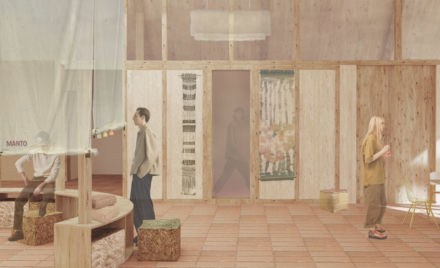


Inspired by the tradition of the filandón, communal gatherings where people shared stories and knowledge while working with wool, the project reinterprets this model of collective learning to foster exchange between shepherds, artisans, researchers, local residents, and visitors. Rooted in ethnoeducation and the horizontal transmission of knowledge, the proposal understands local heritage as a living resource capable of generating new forms of collaboration.
The intervention incorporates research spaces, laboratories, workshops, wool-processing areas, residential facilities, and community gathering spaces, creating an ecosystem where tradition and innovation come together to explore new applications and opportunities for this material. Wool becomes the common thread that connects people, knowledge, and territory.
Beyond addressing a specific challenge, Manto reflects on the role of design in revitalising rural environments. The project promotes the recovery of traditional crafts, the preservation of local culture, and the creation of exchange networks that strengthen community ties. In doing so, it demonstrates how local resources and traditional knowledge can become powerful tools for transformation and resilience in the face of contemporary challenges.
Recognised at the Elisava Masters Awards, the project stood out for its ability to articulate material, social, and territorial dimensions within a cohesive and comprehensive proposal. The jury particularly highlighted the strong connection established between the foundation and the local community, as well as the project’s ability to reposition wool as both a material resource and a catalyst for social transformation.


