
Anatomy of a Frontier
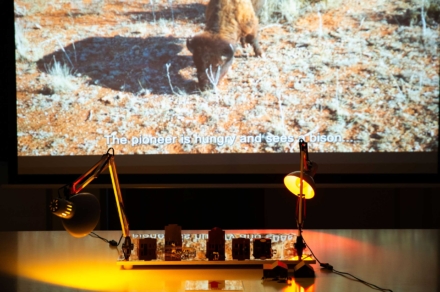
The monumentalization of the Wild West through aesthetic excess has transformed the history of settler colonialism in the United States into a story of destiny rather than violent dispossession. Figures and symbols constructed by this settler imagination—the white cowboy, the open frontier, the taming of the wild—once glorified settler colonial violence and now continue to sensationalize the ongoing state-led violences carried out in the U.S. today.
The aesthetic of the frontier does not remain in the past: it makes possible the militarized and architectural violence enacted along U.S. borders and within U.S. prisons. This thesis hacks the Wild West aesthetic—its myths, architectures, and spatial logics—not to recreate the myth, but to expose the systems behind it. Through appropriation and rupture, it builds a counter-archive: an indictment of the visual regime that continues to use the frontier myths of the Wild West to justify imperial violence.


